

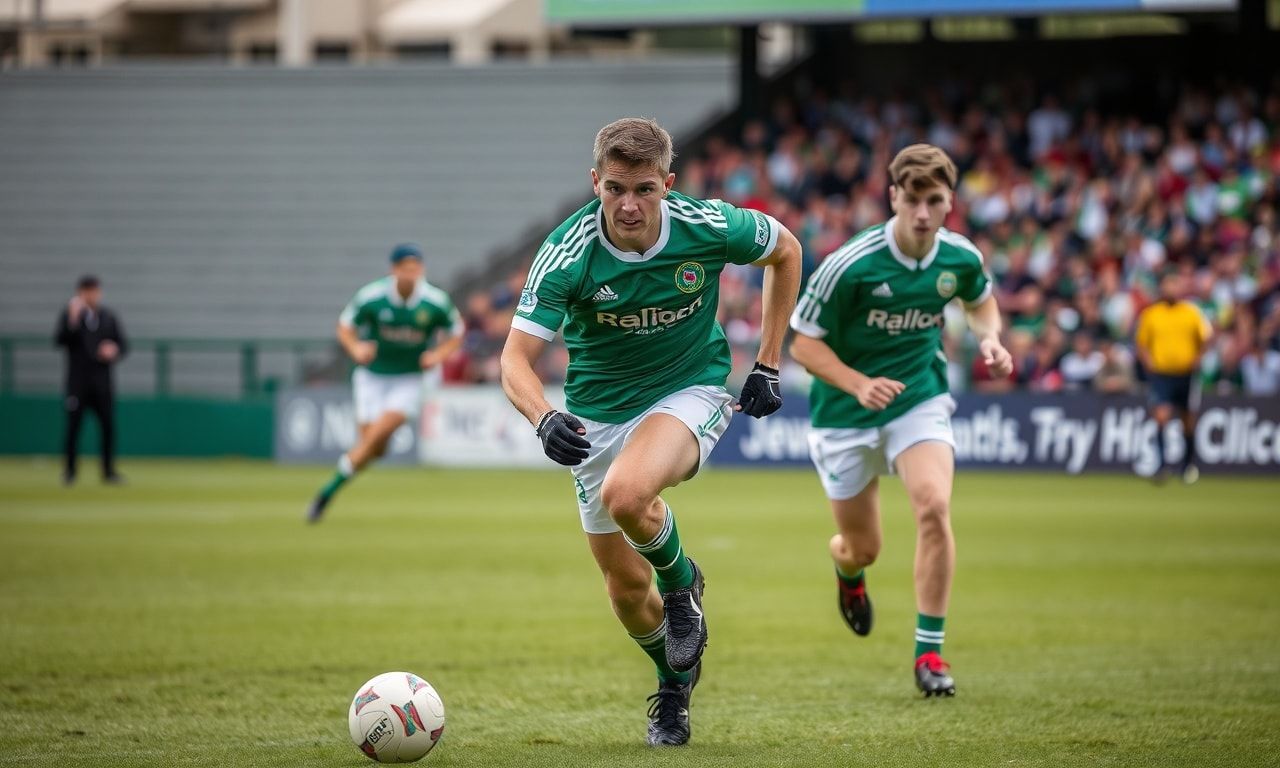
The Origins and Growth of Gaelic Football
Gaelic football, a sport that has captivated millions across Ireland and beyond, has a rich history that dates back centuries. Originating from ancient Irish ball games, it has evolved into a unique and thrilling sport that combines elements of soccer and rugby. The Gaelic Athletic Association (GAA), founded in 1884, played a pivotal role in standardizing the rules and promoting the sport nationwide. Today, Gaelic football is more than just a game; it’s a cultural phenomenon that brings communities together and fosters a sense of national pride.
The Rules and Gameplay
Gaelic football is played between two teams of 15 players each, with the objective of scoring by either kicking or punching the ball into the opponent’s net or over the crossbar. Points are awarded differently depending on how the ball enters the scoring area. A goal, worth three points, is scored when the ball is kicked into the net, while a point, worth one point, is awarded when the ball is kicked over the crossbar. The game is played on a rectangular field, typically larger than a soccer pitch, and matches consist of two halves of 35 minutes each.
One of the most distinctive features of Gaelic football is the use of hands. Players can carry, bounce, or solo (a technique where the ball is balanced on the foot and kicked into the hand) the ball, adding a dynamic and unpredictable element to the game. The physicality and speed of Gaelic football make it a thrilling spectacle for both players and spectators alike.
The Role of Fitness and Training
To excel in Gaelic football, players need a combination of endurance, strength, agility, and skill. Fitness and training are crucial aspects of the sport, with players often engaging in rigorous conditioning programs to enhance their performance. Strength training, cardiovascular exercises, and agility drills are all integral parts of a Gaelic footballer’s regimen. Additionally, specialized skills training, such as kicking, hand-passing, and tackling, is essential for developing the technical abilities required to compete at the highest levels.
For those looking to improve their fitness and skills, resources like información útil consejos diarios can provide valuable insights and daily tips to help athletes stay at the top of their game. Whether you’re a seasoned player or a newcomer to the sport, incorporating these strategies into your training routine can make a significant difference in your performance.
The All-Ireland Senior Football Championship
The pinnacle of Gaelic football is the All-Ireland Senior Football Championship, an annual competition that brings together the best teams from across Ireland. The tournament is structured in a provincial format, with teams competing in their respective provinces (Leinster, Munster, Ulster, and Connacht) before advancing to the All-Ireland series. The championship culminates in the All-Ireland Final, held at Croke Park in Dublin, which attracts tens of thousands of spectators and is broadcast to a global audience.
The All-Ireland Final is more than just a sporting event; it’s a celebration of Irish culture and heritage. The atmosphere at Croke Park on final day is electric, with fans donning their team colors and singing traditional songs. The rivalry between counties adds an extra layer of intensity to the competition, making it one of the most anticipated events in the Irish sporting calendar.
Notable Teams and Players
Over the years, several teams have dominated the All-Ireland Senior Football Championship, with counties like Dublin, Kerry, and Tyrone boasting impressive records. Dublin, in particular, has been a powerhouse in recent years, winning multiple titles in a row. Their success can be attributed to a combination of talented players, strategic coaching, and a strong team ethos.
Individual players have also left an indelible mark on the sport. Legends like Jack O’Shea, Colm O’Rourke, and Peter Canavan are remembered for their exceptional skills and contributions to their respective teams. Today, players like Stephen Cluxton, Brian Fenton, and Peter Keane continue to inspire new generations of Gaelic footballers with their dedication and talent.
The Global Appeal of Gaelic Football
While Gaelic football is deeply rooted in Irish culture, its appeal has spread beyond the shores of Ireland. Expatriate communities around the world have formed clubs and leagues, keeping the spirit of the game alive in countries like the United States, Canada, Australia, and the United Kingdom. These international competitions not only promote the sport but also foster a sense of community among Irish diaspora.
The GAA has also played an active role in promoting Gaelic football globally through initiatives like the GAA International Rules Series, which pits an Irish team against an Australian rules football team. This series has helped to bridge the gap between the two sports and has introduced Gaelic football to a wider audience.
The Future of Gaelic Football
As Gaelic football continues to evolve, the future looks bright for the sport. Efforts to increase participation among women and girls have led to the growth of ladies’ Gaelic football, with the TG4 All-Ireland Senior Ladies’ Football Championship gaining popularity and recognition. Additionally, the introduction of new technologies, such as video refereeing and advanced analytics, is enhancing the accuracy and excitement of the game.
With a strong foundation and a passionate fan base, Gaelic football is poised to continue its legacy as one of the most beloved and dynamic sports in the world. Whether you’re a seasoned player, a dedicated fan, or a newcomer to the sport, there’s always something new and exciting to discover in the world of Gaelic football.