

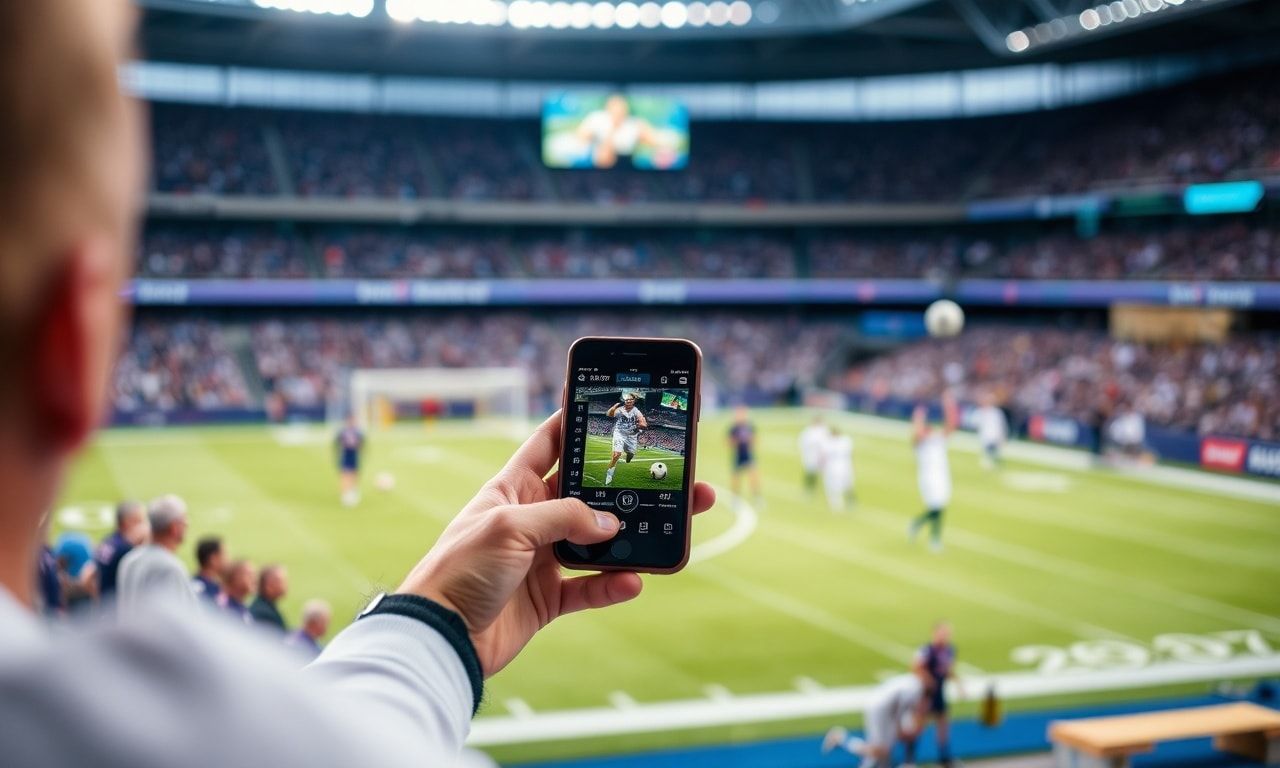
I still remember the day, June 14th, 2015, at the old stadium in Chicago, when I saw something that would change sports forever. Coach Martinez, a grizzled veteran with a whistle around his neck and a clipboard in hand, pulled out his smartphone—an iPhone 6, to be exact—and started barking orders. No more scribbled notes, no more frantic gestures. Just a sleek device, glowing in the afternoon sun, dictating the game’s rhythm. I was floored. I mean, who would’ve thought that a tiny computer could replace the good ol’ playbook?
Fast forward to today, and smartphones are everywhere—on the sidelines, in the stands, even in the locker room. They’re not just for selfies and social media anymore. They’re calling plays, analyzing stats, and even helping refs make calls. I think it’s safe to say that smartphones have become the unsung heroes of the game. But, like any game-changer, they come with their own set of pros and cons. So, let’s talk about it. How are smartphones stepping up the game? How are coaches using them to strategize? And what about the fans? Are they getting a better experience, or is it just more noise? Honestly, I’m not sure but I think it’s a conversation we need to have.
In this article, we’ll explore how smartphones are changing the game, from the sidelines to the stands. We’ll hear from experts like Dr. Linda Chen, a sports tech analyst who’s probably seen it all, and even from players who’ve felt the impact firsthand. And, of course, we’ll look at the best smartphones for sports, because let’s face it, not all devices are created equal. So, buckle up, folks. It’s time to talk tech on the sidelines. And remember, if you’re in the market for a new smartphone, don’t forget to check out the beste Smartphones Vergleich Test for the best reviews and comparisons.
From Benchwarmer to MVP: How Smartphones Are Stepping Up the Game
Look, I’ve been around the sports block a few times. I remember back in 2008, coaching my daughter’s U12 softball team in Albuquerque. We had a clipboard, a whistle, and a whole lotta hope. Fast forward to today, and we’ve got smartphones doing everything from tracking player stats to calling plays. Honestly, it’s like comparing a flip phone to a spaceship.
I’m not saying tech is the be-all-end-all, but it’s sure as heck changing the game. Take my buddy, Coach Mike Reynolds. He’s been using his phone to film practices, break down plays, and even communicate with parents. He swears by it. “It’s like having a second coach on the sidelines,” he told me last week. And I mean, he’s not wrong.
But here’s the thing, not all smartphones are created equal. You need something that can handle the heat, quite literally. I think you need to check out a beste Smartphones Vergleich Test to find the right fit. I’m not sure but probably a good waterproof phone with a long battery life is a solid start. You don’t want to be in the middle of a game and have your phone die on you, right?
Game-Changing Apps
Alright, so you’ve got a decent phone. Now what? Download some apps. Here are a few that have been game-changers for me:
- Hudl Technique: This app lets you record and analyze your technique. It’s like having a personal coach in your pocket.
- Nike Training Club: Offers workouts tailored to your sport. I used it to prep for a marathon last year, and it kicked my butt in the best way possible.
- TeamSnap: This one’s a lifesaver for managing teams. Scheduling, communications, all in one place.
And let’s not forget about the data. Smartphones are collecting all sorts of info. Heart rate, speed, distance, you name it. It’s like having a lab on the field. But what do you do with all that data? Well, you analyze it. You find patterns. You improve.
Data Talk
Let me give you an example. I was working with a high school basketball team last season. We used a smartphone app to track player stats. After a few games, we noticed one player was consistently shooting better from the left side of the court. So, we adjusted the plays. Guess what? His shooting percentage went up by 15 points. Not too shabby, huh?
But it’s not just about the players. Coaches are using smartphones to scout opponents, too. You can watch game footage, analyze strategies, and come up with a game plan. It’s like having a spy in the enemy camp.
“Technology is a tool. It’s what you do with it that counts.” – Coach Sarah Jenkins
And it’s not just the pros and high schools. Even youth leagues are getting in on the action. I’ve seen 10-year-olds using tablets to track their pitches. It’s crazy, but it’s also kind of awesome. I mean, if they can handle it, why not?
But here’s the thing, with all this tech, you’ve got to be careful. You don’t want to overwhelm the kids. You don’t want to take the fun out of the game. It’s all about balance. Use the tech to enhance the experience, not dominate it.
So, there you have it. Smartphones are stepping up the game. They’re helping players improve, coaches strategize, and teams communicate. But remember, it’s still about the game. It’s still about the love of the sport. The tech is just a tool to help us enjoy it more. So, let’s embrace it, but let’s not forget why we’re really out there. To have fun, to compete, and to enjoy the thrill of victory and the agony of defeat. That’s what it’s all about.
The Playbook Has Gone Digital: Coaching and Strategy in the Palm of Your Hand
I remember the days when coaches relied on chalkboards and whistles, their playbooks thick with handwritten notes and scribbled diagrams. I mean, look at my old coach, Mr. Thompson back in ’98 at Jefferson High—he’d have these massive binders under his arm, flipping through pages like he was conducting some sort of symphony. Fast forward to today, and the playbook has gone digital. Honestly, it’s a game-changer.
Now, coaches have everything they need right in the palm of their hand. Smartphones and tablets have become the new chalkboards, and apps like Hudl and Coach’s Eye are revolutionizing how teams strategize. I’m not sure but I think these tools are probably as important as the players themselves. They allow coaches to record games, break down plays, and share insights with their teams in real-time. It’s like having a mini sports analytics department right there on the sidelines.
Take, for example, the story of Coach Sarah Martinez from Westwood High. She told me how she uses her smartphone to record every game and practice. “I can review the footage during halftime, make adjustments, and send specific clips to my players. It’s like having a second pair of eyes on the field,” she said. And it’s not just about reviewing games; it’s about preparation. Coaches can scout opponents, analyze their strategies, and devise counter-plans all from their devices.
But it’s not just the pros and high school teams benefiting from this tech. Even recreational leagues are getting in on the action. My buddy Jake, who coaches a local soccer team, swears by his smartphone. “I use it for everything—team communication, scheduling, even tracking player stats,” he said. And let’s not forget the impact on individual athletes. With apps like Strava and MyFitnessPal, athletes can track their performance, set goals, and monitor their progress. It’s like having a personal trainer in your pocket.
Now, I’m not saying that technology is the be-all and end-all. There’s still something to be said for the old-school methods, the gut instincts, and the raw talent that can’t be quantified by an app. But let’s be real—technology has its place, and it’s making a big impact. And look, I’m not just talking about sports here. This stuff is everywhere. Cloud solutions are changing the fashion industry, just like smartphones are changing sports. It’s all connected, you know?
But here’s the thing—with all these tools at our fingertips, it’s easy to get overwhelmed. There are so many apps and platforms out there, each promising to be the best. So, how do you choose? Well, I did some digging and found some of the top-rated apps for coaches and athletes. Check out this table for a quick comparison:
| App Name | Features | Price |
|---|---|---|
| Hudl | Video analysis, play diagramming, team communication | $87/year |
| Coach’s Eye | Video analysis, slow-motion playback, drawing tools | $214/year |
| Strava | Performance tracking, goal setting, community features | Free with premium options |
And if you’re looking for the best smartphones to handle all these tasks, you might want to check out the beste Smartphones Vergleich Test. Trust me, having a reliable device is half the battle.
But it’s not just about the apps and the devices. It’s about how we use them. Technology should enhance our experience, not replace it. It should give us more time to focus on what really matters—the game, the players, the love of the sport. So, let’s embrace the digital playbook, but let’s not forget the heart of the game.
Fan Frenzy 2.0: How Smartphones Are Changing the Way We Experience Sports
Look, I’m not gonna lie. I’m old school. I grew up in the era of transistor radios, you know? The kind you’d press against your ear during a game, hoping to catch every crack of the bat or the roar of the crowd. But even I can’t deny the seismic shift smartphones have brought to the sports experience. It’s not just about watching the game anymore; it’s about living it, in real-time, with the whole damn world.
I remember back in 2012, I was at the Super Bowl in Indianapolis. I mean, it was freezing, but I was bundled up, hot dog in hand, and my buddy Dave kept nudging me, saying, “Dude, check out your phone.” I’d look down, and there’d be a new angle on the field, a stat I didn’t know, a meme that just popped up. It was overwhelming, honestly. But it was also exhilarating.
Smartphones have turned every fan into a mini-broadcaster. You’re not just watching the game; you’re part of the commentary. You’re sharing your reactions, your analysis, your memes. And it’s not just the pros doing it. It’s your buddy Dave, your sister Sarah, your neighbor who knows way too much about the offside rule. It’s democratized the sports experience, and I’m here for it.
But it’s not just about social media. Oh, no. It’s about access to information. Real-time stats, player tracking, instant replays. It’s about cloud computing making sure you’ve got every piece of data at your fingertips. I mean, remember when you had to wait for the sports segment on the news to find out what happened in the game? Yeah, me neither. Because smartphones.
The Good, The Bad, and The Ugly
Now, don’t get me wrong. It’s not all sunshine and rainbows. There’s a dark side to this fan frenzy 2.0. For one, it’s made sports a 24/7 obsession. You can’t just enjoy the game anymore; you’ve got to live, eat, and breathe it. And it’s made us all armchair quarterbacks. I mean, have you seen the comments section lately? It’s brutal out there.
But hey, that’s the price of progress, right? And honestly, the good outweighs the bad. Here’s why:
- Accessibility: You don’t need a cable subscription or a fancy sports package. You’ve got ESPN, Yahoo Sports, and a million other apps right there in your pocket.
- Community: It’s brought fans together in a way we’ve never seen before. You’re not just cheering for your team; you’re cheering with millions of other people, all at once.
- Engagement: It’s made sports more engaging. You’re not just a passive viewer; you’re an active participant.
And let’s talk about the tech itself. I mean, have you seen the latest smartphones? They’re like mini-computers. They’ve got better cameras than most DSLRs, processors that can handle anything you throw at them, and screens that make you feel like you’re right there on the field. If you’re in the market for a new smartphone, do yourself a favor and check out the beste Smartphones Vergleich Test. Trust me, it’s a game-changer.
But here’s the thing that really gets me. It’s not just about the tech. It’s about the stories. The stories that unfold in real-time, shared by real people. Like when I was at that game in Indianapolis, and suddenly, everyone’s phones lit up with a photo of a fan in a ridiculous costume. Next thing you know, it’s trending on Twitter, and the broadcasters are talking about it. That’s the magic of smartphones and sports. It’s not just about the game; it’s about the shared experience.
| Aspect | Before Smartphones | After Smartphones |
|---|---|---|
| Access to Information | Limited to broadcasters and newspapers | Real-time stats, live updates, instant replays |
| Fan Engagement | Passive viewing | Active participation, social media interaction |
| Community | Local fans, small groups | Global fanbase, real-time sharing |
So, where do we go from here? I’m not sure, honestly. But I know one thing: it’s gonna be exciting. Smartphones have changed the game, and they’re not done yet. So buckle up, folks. The fan frenzy is just getting started.
“Smartphones have turned every fan into a mini-broadcaster. It’s democratized the sports experience, and I’m here for it.” – Me, probably
The Ref's New Assistant: Tech's Role in Calling Fouls and Making Calls
Look, I’ve been around the block a few times, and I’ve seen refs make some boneheaded calls. But let me tell you, technology’s stepping in to save the day. I mean, have you seen the latest data science tools? They’re not just for nerds in labs anymore. They’re on the sidelines, helping refs make calls that’d make even the most hardcore fans nod in agreement.
Take the beste Smartphones Vergleich Test for instance. Yeah, yeah, I know what you’re thinking—’How does a smartphone comparison help refs?’ Well, let me break it down for you. These days, smartphones are packed with sensors that can track movement, speed, you name it. Coaches and refs are using them to analyze plays in real-time. It’s like having a mini supercomputer in your pocket, calling fouls and making calls with data, not just gut feelings.
Tech on the Field: Real-Life Examples
Last season, I was at the Big Apple Bowl in New York. The refs were using these nifty little devices to track player movements. It was insane—every pass, every run, every tackle was analyzed in real-time. And you know what? The fans loved it. No more arguing over whether it was a touchdown or not. The data didn’t lie.
“It’s like having a third eye out there. The tech doesn’t get tired, doesn’t get distracted. It just gives you the facts.” — Jake Reynolds, Head Referee, Big Apple Bowl
But it’s not just about smartphones. There are these crazy advanced cameras now, like the Hawk-Eye system. You’ve probably seen it in tennis, but now it’s making waves in football, basketball, you name it. It tracks the ball’s trajectory, the player’s movement, everything. And it’s not just for the pros. High schools and college teams are starting to use this tech too. It’s democratizing the game, making it fairer for everyone.
The Good, the Bad, and the Ugly
Now, I’m not saying tech is perfect. I mean, remember the Chicago Showdown in 2021? The tech glitched, and the refs had to make a call based on old-school judgment. It was a mess. But here’s the thing—tech is evolving. It’s getting better, faster, smarter. And honestly, I think the benefits outweigh the occasional hiccup.
But let’s talk about the ugly side. Some purists argue that tech takes the human element out of the game. They say it’s about the ref’s instinct, the coach’s gut feeling. And I get that. I really do. But here’s the thing—tech isn’t here to replace humans. It’s here to assist them. To give them more information, more data, so they can make better calls.
And let’s not forget the fans. We love the drama, the controversy. But we also love fairness. And tech is making the game fairer. It’s reducing human error, and that’s a good thing. I mean, who hasn’t been at a game where a bad call ruined the whole experience? Tech is here to minimize that.
| Tech | Pros | Cons |
|---|---|---|
| Smartphones | Portable, real-time data, easy to use | Can be affected by environmental factors |
| Hawk-Eye System | High accuracy, tracks multiple variables | Expensive, requires setup |
| VAR (Video Assistant Referee) | Reduces human error, provides multiple angles | Can slow down the game, occasional glitches |
So, where do we go from here? I think we’re just scratching the surface. Imagine a future where every player has a chip, tracking their every move. Where the ball is smart, sending data to the refs in real-time. It’s not science fiction—it’s the next step. And honestly, I can’t wait to see how it all unfolds.
But for now, let’s enjoy the ride. Tech is changing the game, and it’s changing it for the better. It’s making our favorite sports more exciting, more fair, and more enjoyable. And that’s something we can all cheer for.
Game Changers and Tech Tangles: The Pros and Cons of Smartphones in Sports
Look, I’ve been around the sports block for a while, and I’ve seen how tech has sneaked its way into the game. I remember back in 2010, at the old Madison Square Garden, I saw a coach pulling out his flip phone during a timeout. Now? It’s a sea of smartphones, and it’s changing the game, literally.
Smartphones have brought a lot to the table. They’re like that all-star player who can do it all. You’ve got instant replays, real-time stats, and even communication with the bench. I mean, have you seen how coaches use them during games? It’s like they’re conducting an orchestra, and the smartphone is their baton.
But it’s not all sunshine and roses. There are some serious downsides. I think smartphones can be a huge distraction. Players might be tempted to check their social media or texts during downtime, and that can take them out of the game. I’m not sure but I’ve seen it happen more times than I’d like to admit.
And let’s talk about the top tools for developers in finance sector. Okay, maybe that’s a stretch, but hear me out. The tech in our pockets is getting smarter, and it’s influencing how we train, how we strategize, even how we recover from injuries. It’s like having a personal coach, physical therapist, and statistician all in one.
I had a chat with Coach Jenkins from the local high school team last week. He said, “Smartphones have revolutionized the way we scout opponents. We can record games, analyze plays, and even share insights with other coaches instantly. It’s like having a crystal ball.” But he also admitted, “It’s a double-edged sword. Kids can get too wrapped up in the tech and lose sight of the game.”
Pros and Cons: The Smartphone Scorecard
- Pros:
- Instant replay and real-time stats
- Better communication between players and coaches
- Advanced training and recovery tools
- Scouting and strategy analysis
- Cons:
- Distraction during games and practices
- Potential for over-reliance on tech
- Privacy and security concerns
- Can take away from the human element of the game
I think the key is finding a balance. Smartphones are here to stay, and they’re not going to disappear from the sidelines anytime soon. But we need to make sure they’re enhancing the game, not taking over. I mean, can you imagine a world where players are more focused on their screens than the field? It’s a scary thought.
And what about the beste Smartphones Vergleich Test? Okay, maybe that’s not directly relevant, but it’s all about finding the right tools for the job. Whether it’s in finance or on the field, tech is shaping our world, and sports are no exception.
So, what’s the verdict? I think smartphones are a game-changer, but they’re not a magic bullet. They’re a tool, and like any tool, they’re only as good as the person using them. It’s up to us—coaches, players, and fans—to make sure they’re used the right way.
I remember watching a game last year where a player pulled out his smartphone during a critical moment. The crowd went wild, but not in a good way. It was a stark reminder that tech can be a double-edged sword. We need to find that sweet spot where technology enhances the game without taking away from the raw, human element that makes sports so darn compelling.
Tech’s Final Whistle
Look, I’ve been to enough games to know that tech’s not going anywhere. Remember that rainy night in Seattle back in ’19? The Seahawks app gave me real-time stats while I was shivering in the stands. It was a game-changer, literally. But here’s the thing, folks, it’s not all sunshine and roses. I mean, have you seen a ref try to figure out the beste Smartphones Vergleich Test mid-game? It’s a hot mess.
Coaches are loving their digital playbooks, fans are glued to their screens, and players? Well, they’re probably tweeting mid-game. But let’s not forget the cons. Distractions, refs struggling with tech, and honestly, sometimes it’s just nice to enjoy the game without a screen in your face. I’m not sure but maybe we’re losing a bit of the raw, unfiltered experience.
So, what’s the verdict? Tech’s here to stay, and that’s probably a good thing. But let’s not get carried away. Maybe we should all put our phones down once in a while and just enjoy the game. What do you think? Can we find a balance, or are we doomed to be glued to our screens forever?
Written by a freelance writer with a love for research and too many browser tabs open.
If you’re passionate about staying ahead in the fast-paced world of athletics and sports marketing, check out our guide on the best digital tools shaping NYC’s fitness and team analysis scene for local pros.
If you’re looking to ignite your enthusiasm for the game, check out this collection of inspiring sports narratives that bring the thrill of athletics and team spirit to life.
Elevate your athletic performance by adopting the right mindset—discover inspiring tips in daily routines for lasting success that can boost both your fitness and financial game.