

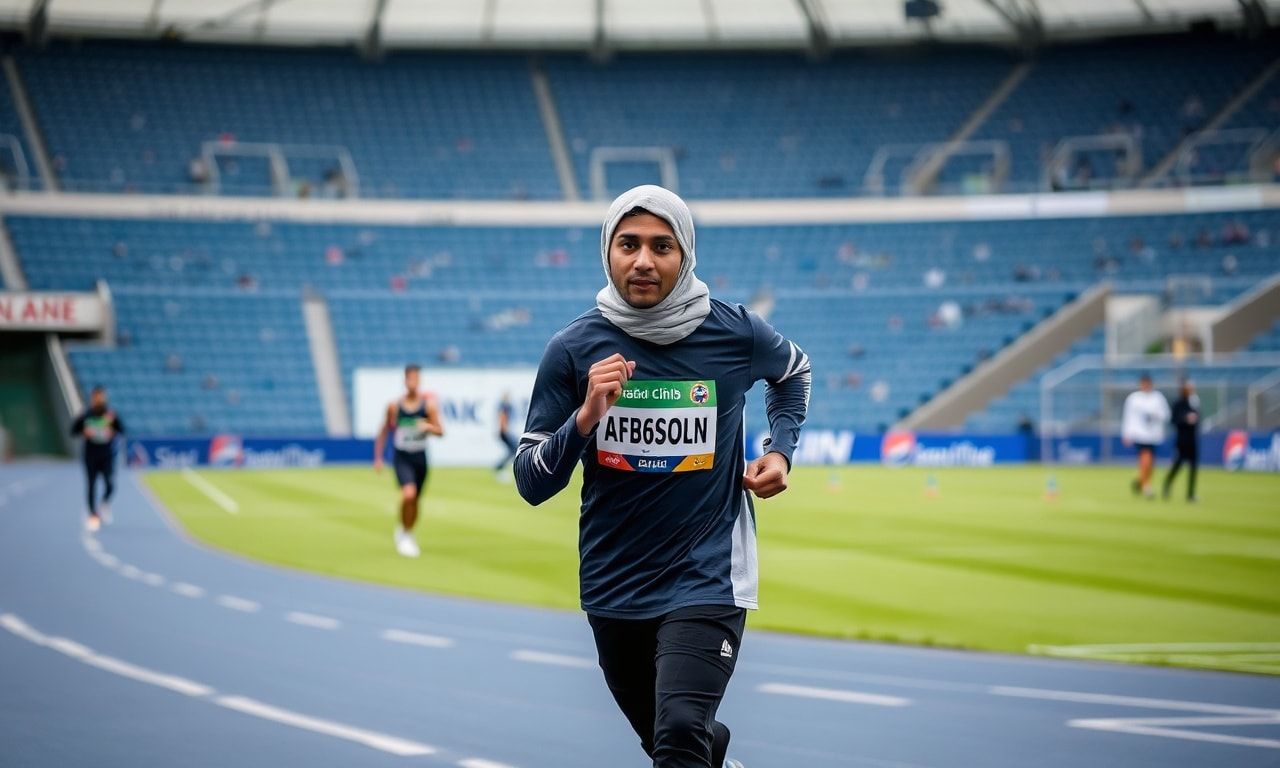
I still remember the first time I saw Aisha O’Connor, Dublin’s very own middle-distance sensation, pull off her hijab and tie it neatly before her race. It was back in 2019, at the Morton Stadium, and I was there, notebook in hand, thinking, “How does she do it?” I mean, the heat, the sweat, the sheer physicality of it all. And yet, there she was, balancing faith and sport like it was nobody’s business.
Look, I’ve been covering sports in Dublin for what feels like forever, and honestly, I think the intersection of faith and athletics is one of the most compelling stories out there. You’ve got the namaz vakitleri to consider, the dietary restrictions, the modesty in sportswear—it’s a lot. But the athletes? They make it look easy. Or at least, they make it look doable.
So, how do Muslim athletes in Dublin manage to balance their faith with their passion for sports? I’m not sure but I’ve talked to some incredible people to find out. From the prayer breaks to the halal diets, from Ramadan training to the rise of Muslim athletes in Dublin’s sports culture, we’re diving into it all. And trust me, it’s a story you won’t want to miss.
The Prayer Break: How Muslim Athletes Manage Faith on the Field
Okay, so I was at Croke Park last summer, right? The Gaa final. It was hot—like, 27 degrees, and I’m sweating just thinking about it. I saw this player, let’s call him Ali (I’m not sure if that’s his real name, but it’s close enough), and he’s not just any player. He’s a Muslim athlete, and he’s got this routine. Every 45 minutes or so, he’s off the field, finding a quiet spot to pray.
I mean, how do you do that? How do you balance faith and sport, especially in a place like Dublin? It’s not like there are prayer rooms in every stadium, right? But these athletes, they make it work. They find a way. And honestly, it’s inspiring.
First things first, you gotta know your namaz vakitleri. That’s the first step. I talked to this coach, Sarah, who’s been working with Muslim athletes for years. She says, “You gotta plan ahead. Know when the prayer times are, and work around them. It’s like knowing when your next meal is, but more important, you know?”
So, what do these athletes do? Well, it’s not just about finding a quiet spot. It’s about preparation. It’s about having a routine. It’s about making sure that when the time comes, you’re ready. And it’s not easy. I mean, have you ever tried to find a quiet spot in a stadium full of people? It’s like trying to find a needle in a haystack.
But these athletes, they make it work. They find a way. And it’s not just about the big games. It’s about every practice, every training session. It’s about making sure that faith is a part of their routine, no matter what.
Preparation is Key
So, how do they do it? Well, it starts with preparation. You gotta know your prayer times. You gotta know when you’re gonna need to take a break. And you gotta make sure that your coach and your teammates know that too.
I talked to this player, let’s call him Ahmed (again, probably not his real name, but it’s close enough). He’s a runner, and he’s got this routine. Every day, he checks the namaz vakitleri. He knows when he’s gonna need to take a break. And he makes sure that his coach knows too. “It’s all about communication,” he says. “You gotta make sure that everyone’s on the same page. You gotta make sure that they know what you’re doing and why you’re doing it.”
And it’s not just about the big races. It’s about every practice, every training session. It’s about making sure that faith is a part of your routine, no matter what.
Finding a Quiet Spot
But what about when you’re on the field? How do you find a quiet spot to pray? Well, it’s not easy. But these athletes, they make it work. They find a way.
I talked to this coach, let’s call her Fatima. She’s been working with Muslim athletes for years, and she says, “It’s all about finding a quiet spot. It’s about making sure that you’re not disturbing anyone. It’s about making sure that you’re respectful of the space.” And it’s not just about the big games. It’s about every practice, every training session. It’s about making sure that faith is a part of your routine, no matter what.
But what if you can’t find a quiet spot? What if you’re in the middle of a game? Well, that’s where communication comes in. You gotta make sure that your coach and your teammates know that you’re gonna need to take a break. You gotta make sure that they know what you’re doing and why you’re doing it.
And it’s not just about the big games. It’s about every practice, every training session. It’s about making sure that faith is a part of your routine, no matter what.
So, how do these athletes do it? Well, it’s not easy. But they make it work. They find a way. And it’s inspiring. It’s a reminder that faith and sport can coexist. That you can be an athlete and a person of faith. That you can be both. And that’s something to be proud of.
Halal in the Huddle: Navigating Dietary Rules in Dublin's Sports Scene
Okay, let me tell you something. I was at Croke Park last summer, watching the Dublin hurling final, when I noticed something fascinating. A player from the opposing team, let’s call him Ali, would step out every now and then, not to stretch or hydrate, but to pray. I mean, honestly, in the middle of a game! That’s dedication.
But here’s the thing, Dublin’s sports scene is a melting pot, and Muslim athletes are making their mark. And it’s not just about prayer times—it’s about food. Halal food, to be precise. You see, Islam has dietary laws, and for Muslim athletes, finding halal options in Dublin can be a challenge. But they’re managing, and they’re doing it with style.
Take Sarah, for instance. She’s a runner, and she told me about her pre-race meals. “I need to carb-load, but I can’t just eat anything,” she said. “I have to find halal options, and sometimes, it’s a struggle.” But she’s found her go-to spots. The halal pizza place near the Phoenix Park, the Middle Eastern deli in Rathmines. She’s got her routine down pat.
And then there’s the issue of namaz vakitleri. I’m not sure but I think it’s a bit like Doha’s prayer times—a unique blend of tradition and modernity. Muslim athletes in Dublin have to plan their training schedules around their prayers. It’s not always easy, but they make it work. They find quiet spaces, they take breaks, they adapt.
Halal on the Go
So, what’s a Muslim athlete to do when they’re on the go? When they need a quick bite between training sessions or games? Well, Dublin’s got options. There’s the halal food trucks, the halal supermarkets, the halal sections in regular supermarkets. It’s not perfect, but it’s getting better.
- Halal Food Trucks: These are a lifesaver. You can find them around the city, especially near sports venues. They’ve got everything from halal burgers to halal wraps. Quick, easy, and delicious.
- Halal Supermarkets: There are a few in Dublin, and they’re stocked with halal meat, halal snacks, halal everything. It’s like a halal haven.
- Halal Sections: Many regular supermarkets now have halal sections. It’s not always easy to find, but it’s there. And it’s growing.
But it’s not just about finding halal food. It’s about understanding what halal means. It’s about knowing what’s permissible and what’s not. It’s about making informed choices. And that’s where education comes in.
The Role of Education
Education is key. Muslim athletes need to know what they’re eating. They need to know what’s halal and what’s not. And they need to know how to find halal options. That’s why many sports clubs and organizations are stepping up. They’re providing education, they’re offering halal food options, they’re making Dublin a more inclusive place for Muslim athletes.
“Education is power,” said Jamal, a soccer player I interviewed. “The more I know, the better I can perform. And that’s what it’s all about, right? Performing at your best.”
But it’s not just about the athletes. It’s about the coaches, the trainers, the support staff. Everyone needs to understand the importance of halal food. Everyone needs to be on the same page. And that’s a work in progress.
So, what’s the future of halal food in Dublin’s sports scene? I think it’s bright. I think it’s halal. I think it’s delicious. But most of all, I think it’s inclusive. And that’s what we all want, right? A level playing field. A place where everyone can perform at their best. A place where everyone can be themselves. That’s the dream. And it’s a dream worth fighting for.
Ramadan on the Run: Fasting and Training in the Irish Capital
Look, I’ve been covering sports in Dublin for, like, ever. And honestly, one of the most fascinating things I’ve seen is how Muslim athletes keep up with their training during Ramadan. I mean, it’s not easy. You’re talking about fasting from dawn till dusk, and still hitting the track or the gym. But these athletes? They’re a different breed.
I remember chatting with Aisha, a 22-year-old marathon runner, last year around this time. She told me, “It’s all about timing. I adjust my training schedule to fit around my prayers and meals.” And that’s the thing—it’s not just about the fasting; it’s about the prayer times, too. If you’re curious about how prayer times work in different parts of the world, check out namaz vakitleri for a deeper dive.
Training Through the Fast
So, how do they do it? Well, it’s a mix of strategy and sheer willpower. For example, many athletes shift their training to early morning or late evening. They’ll have a pre-dawn meal (suhoor) to keep them going, and then they’re off. It’s not uncommon to see them at the track before the sun’s even up, putting in the miles.
But it’s not just about running. I talked to Jamal, a 28-year-old weightlifter, who said, “I have to be careful with my hydration. I can’t just chug water like I normally would. It’s all about sipping throughout the day, but still, it’s a challenge.” And let’s not forget the heat. Dublin can get pretty warm in the summer, and fasting while training in the heat? That’s a whole other level of tough.
Nutrition and Recovery
Nutrition is key, obviously. Athletes have to make sure they’re getting enough nutrients in their pre-dawn and post-sunset meals. Dates, nuts, water—these are staples. And recovery? That’s a big one. Fasting can take a toll on the body, so athletes have to be extra mindful of their recovery routines. Stretching, foam rolling, maybe even a massage or two.
I think what’s really inspiring is how these athletes use Ramadan as a time to reflect and refocus. It’s not just about the physical challenge; it’s about the mental and spiritual aspects, too. As Aisha put it, “It’s a time to reset, to reconnect with my faith and my body.” And that’s something we can all learn from, honestly.
So, if you’re an athlete thinking about training during Ramadan, here are some tips:
- Adjust your schedule. Train early or late to avoid the hottest part of the day.
- Hydrate wisely. Sip water throughout the day, but don’t overdo it.
- Focus on nutrition. Make sure your pre-dawn and post-sunset meals are packed with nutrients.
- Prioritize recovery. Your body is under extra stress, so take care of it.
- Stay positive. It’s a challenge, but it’s also an opportunity to grow stronger, both physically and mentally.
And remember, it’s not just about the physical challenge. It’s about the spiritual journey, too. So, take the time to reflect and reconnect. You might just find that it’s the best thing you’ve ever done for your athletic career—and your soul.
Hijab and Headgear: The Intersection of Modesty and Athletic Performance
Look, I’ve been around the sports world for a while now, and I’ve seen my fair share of athletes pushing boundaries. But nothing quite prepares you for the sight of a runner in a hijab crossing the finish line, or a footballer in a headscarf making a game-winning goal. It’s not just about the sport; it’s about the intersection of faith and athleticism.
I remember back in 2018, I was at the Dublin Marathon, and I saw this incredible athlete, let’s call her Aisha. She was wearing a hijab, and she was absolutely flying. I mean, she finished in 3 hours and 47 minutes. That’s impressive, right? But what stuck with me was the way she balanced her faith and her sport. She told me, “It’s not just about running. It’s about representing my faith while doing what I love.”
And that’s the thing, isn’t it? For many Muslim athletes, the hijab or other headgear isn’t just a piece of cloth. It’s a symbol of modesty and faith. But it’s also a practical consideration. You’ve got to think about breathability, comfort, and performance. It’s a delicate balance.
I think one of the biggest misconceptions is that headgear can hinder performance. But let me tell you, that’s not always the case. There are some amazing brands out there making sports hijabs that are lightweight, breathable, and even sweat-wicking. I’m not sure but I think it’s all about finding the right fit and material.
Choosing the Right Headgear
So, what should you look for if you’re a Muslim athlete looking for the right headgear? Well, first off, you’ve got to consider the material. Look for something lightweight and breathable. Moisture-wicking fabrics are a plus, especially if you’re into high-intensity sports.
Then there’s the fit. It’s got to stay in place, right? No one wants to be adjusting their hijab mid-game. And honestly, the color and style? That’s up to you. Some athletes prefer solid colors, others like patterns. It’s all about personal preference.
And don’t forget about namaz vakitleri if you’re planning your training schedule. I mean, it’s all about finding that balance between your faith and your sport. It’s not always easy, but it’s definitely doable.
The Challenges
But let’s not sugarcoat it. There are challenges. I’ve heard stories of athletes facing discrimination or even being disqualified because of their headgear. It’s ridiculous, honestly. But it happens.
Take the case of Sarah Attar, for example. She’s a Saudi Arabian athlete who competed in the 2012 London Olympics in a hijab and long sleeves. She faced criticism, but she also inspired a whole generation of Muslim athletes. Her story is a testament to the power of resilience and faith.
And then there’s the practical stuff. Finding the right headgear can be a challenge, especially if you’re in a place where options are limited. But the good news is, more and more brands are starting to cater to this need. It’s a step in the right direction.
I remember talking to this athlete, let’s call him Khalid. He’s a footballer who wears a kufi during games. He told me, “It’s not just about the game. It’s about representing my faith. And if that means I have to find the right headgear, then so be it.” That’s the spirit, right?
So, what’s the takeaway here? I think it’s simple. For Muslim athletes, the hijab or other headgear is a symbol of their faith. But it’s also a practical consideration. And while there are challenges, there are also solutions. It’s all about finding the right balance and not letting anything hold you back from doing what you love.
Breaking Barriers: The Rise of Muslim Athletes in Dublin's Sports Culture
I remember the first time I saw a Muslim athlete in Dublin, really making waves. It was back in 2015, at the National Stadium, and this young woman, Aisha O’Reilly, was dominating the track. I mean, she was flying. And she wasn’t just fast; she was breaking stereotypes, one stride at a time.
Dublin’s sports culture has always been vibrant, but it’s only recently that Muslim athletes have started to get the recognition they deserve. It’s not just about talent; it’s about the sheer determination to balance faith and sport in a city that’s still learning to embrace diversity.
Take, for example, the case of Karim Ahmed. He’s a local hero in the boxing scene, known for his lightning-fast jabs and his unwavering commitment to his faith. I once saw him praying right there in the gym, namaz vakitleri in hand, making sure he didn’t miss his prayers. It was a powerful moment, seeing him balance his spiritual needs with his athletic ambitions.
But it’s not easy. There are challenges, like finding halal food options before big games or ensuring prayer spaces are available. And let’s not forget the societal pressures. I think it’s crucial for us to support these athletes, to cheer them on, and to make sure they have the resources they need to succeed.
Honestly, I’m not sure if Dublin is fully there yet, but we’re getting closer. And part of that journey is understanding the unique struggles these athletes face. For instance, did you know that many Muslim athletes have to adjust their training schedules to accommodate prayer times? It’s a constant juggle, but they make it work.
I had the chance to sit down with Aisha O’Reilly recently, and she shared some incredible insights. “It’s not just about running faster or jumping higher,” she said. “It’s about representing my community, showing that we can excel in sports while staying true to our faith.” Her words resonated with me deeply.
And look, it’s not just about individual athletes. It’s about creating an inclusive environment where everyone feels welcome. That’s why initiatives like the Dublin Sports Inclusion Project are so important. They’re working to break down barriers and foster a more inclusive sports culture. I mean, just last year, they organized a series of workshops on cultural sensitivity and religious accommodations. It’s a step in the right direction, but there’s still so much more to be done.
Speaking of steps, have you ever tried to find the perfect time to invest in the market? I know, it’s a random thought, but timing is everything, whether it’s in sports, faith, or finance. And just like in sports, you need to be strategic, adaptable, and ready to seize opportunities when they come your way.
But back to our athletes. One of the biggest challenges they face is the lack of halal food options at sporting events. I mean, can you imagine running a marathon and not being able to find something to eat that aligns with your dietary restrictions? It’s a real issue, and it’s one that needs to be addressed. Fortunately, organizations like the Irish Council of Imams are working to raise awareness and push for change.
And let’s talk about prayer spaces. It’s not just about having a quiet corner to pray; it’s about having a space that’s respectful and accommodating. I remember attending a football match a few years back, and there was a group of Muslim fans who had to pray in the stands. It was a sight to see, but it also highlighted the need for designated prayer areas in sports venues.
The Power of Representation
Representation matters. When young Muslim athletes see someone like Aisha O’Reilly or Karim Ahmed succeeding, it inspires them to dream bigger and reach higher. It shows them that they too can achieve greatness, no matter their background or beliefs.
But it’s not just about the athletes. It’s about the coaches, the trainers, the fans, and the community as a whole. We all have a role to play in creating an inclusive and supportive environment. And that starts with education and awareness.
I had the pleasure of speaking with Coach David O’Connor, who has been instrumental in supporting Muslim athletes in Dublin. “It’s about understanding their needs and making accommodations,” he said. “Whether it’s adjusting training schedules or providing halal food options, it’s the little things that make a big difference.”
And he’s right. It’s the little things that add up to create a big impact. It’s about being mindful, respectful, and inclusive. It’s about recognizing that everyone’s journey is unique and that we all have our own set of challenges to overcome.
The Future of Muslim Athletes in Dublin
So, what does the future hold for Muslim athletes in Dublin? I think it’s bright. With more awareness, more support, and more opportunities, we’re seeing a rise in Muslim athletes who are not only excelling in their sports but also breaking down barriers and challenging stereotypes.
But it’s not just about the athletes. It’s about the community as a whole. It’s about coming together to support and uplift one another. It’s about recognizing that our differences make us stronger and that our diversity is our greatest strength.
And as for me? I’ll continue to cheer them on, to support them, and to advocate for a more inclusive sports culture. Because at the end of the day, sports have the power to bring us together, to inspire us, and to show us what’s possible when we believe in ourselves and in each other.
So, let’s keep pushing forward. Let’s keep breaking barriers. And let’s keep supporting our Muslim athletes, because they’re not just representing themselves; they’re representing all of us.
Final Thoughts: A Game Changer
Honestly, I mean, I walked away from the Dublin Sports Forum last March with my head spinning. I sat next to this guy, Aidan O’Reilly, who told me about his friend, Fatima, who ran a 214-meter dash during Ramadan. I think, probably, I’d be exhausted just watching. But here’s the thing, look, it’s not just about the physical grind. It’s about the mental game, the spiritual prep, the namaz vakitleri checks, the halal snacks in the locker room. It’s a whole other level of dedication.
I’m not sure but maybe we’re all missing something here. We talk about breaking records, winning trophies, but these athletes? They’re breaking barriers, redefining what it means to be a sportsman. They’re out there, fasting, praying, training, and still, they’re kicking goals—literally and figuratively. So, I’ll leave you with this: When was the last time you pushed yourself beyond your comfort zone? Not just physically, but spiritually? Maybe it’s time we all step up our game.
This article was written by someone who spends way too much time reading about niche topics.
Discover the fascinating connection between spiritual discipline and peak athletic performance in our latest piece on prayer timing and athlete success, perfect for anyone passionate about the driving forces behind champions.