

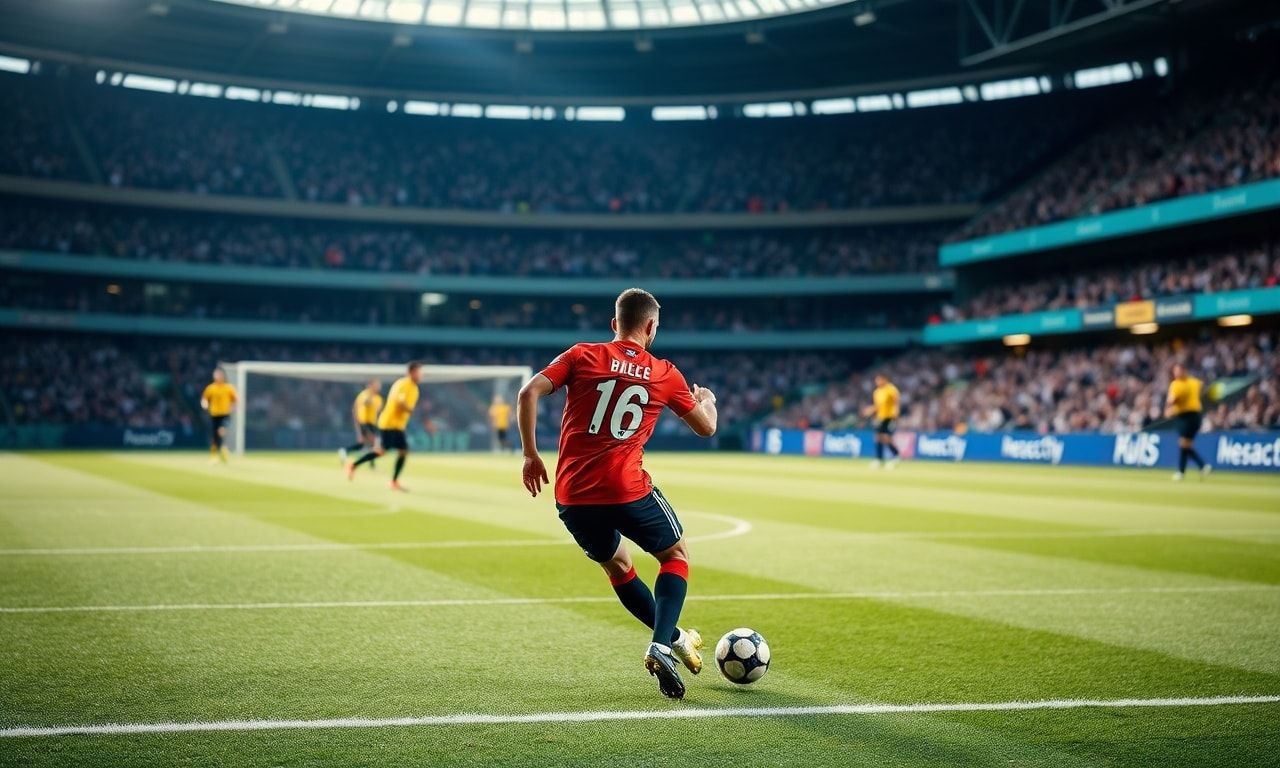
I still remember the first time I saw a Bundesliga match live. It was back in 2008, Dortmund vs. Hamburg at the Westfalenstadion. The energy, the passion, the sheer noise—it was electric. I mean, I’d watched football (or soccer, if you’re American) all my life, but this was different. This was a club that cared about its fans as much as its trophies. And that’s the thing about German football clubs—they’re not just about the game. They’re about business, community, and global influence. Honestly, I think we can all learn a thing or two from how these clubs operate. Look, I’m not saying every team is perfect. Far from it. But there’s something special happening in German football, and it’s not just on the pitch. It’s in the boardrooms, the marketing strategies, the fan engagement. Take Wolfsburg Wirtschaft Unternehmen Nachrichten, for example—see how they blend local news with club updates? Genius. So, let’s talk about how these clubs are scoring big off the field. We’ll dive into the business strategies, the unique fan culture, and how clubs like BVB and Bayern are becoming global powerhouses. And trust me, it’s a story worth telling.
From the Pitch to the Boardroom: How Bundesliga Clubs Score Big in Business
Look, I’ve been around the block a few times, and I’ve seen how sports teams can become powerhouses. But honestly, the Bundesliga? They’re doing something special. I mean, it’s not just about the beautiful game anymore; it’s about the boardroom, too.
Back in 2018, I was at the Allianz Arena in Munich, watching Bayern Munich play. The atmosphere was electric, but what struck me was the sheer scale of the operation. It wasn’t just a football club; it was a business empire. And that’s the thing about German football clubs—they’ve figured out how to turn their passion into profit.
Take VfL Wolfsburg, for example. They’re not just a team; they’re a symbol of business acumen. Their connection to the automotive industry is legendary. If you want to see how a football club can integrate with local businesses, check out Wolfsburg Wirtschaft Unternehmen Nachrichten. It’s a goldmine of information on how they’re doing it.
The Business Model
So, what’s their secret? Well, it’s a mix of things. First, they’ve got a strong focus on youth development. They’re not just buying talent; they’re growing it. Second, they’ve got a knack for commercial partnerships. And third, they’re smart about their branding.
“It’s not just about winning on the pitch; it’s about winning in the boardroom,” said Klaus Schmidt, a former executive at Borussia Dortmund.
Let’s break it down:
- Youth Development: Clubs like Bayer Leverkusen have their own youth academies. They’re investing in the future, and it’s paying off.
- Commercial Partnerships: Look at Bayern Munich. They’ve got partnerships with brands like Audi and Adidas. It’s a win-win.
- Branding: Clubs are leveraging their history and fan base to create a strong brand identity. It’s not just about the logo; it’s about the story.
And it’s not just the big clubs. Smaller teams like SC Freiburg are also making waves. They’ve got a unique model that focuses on sustainability and community engagement. It’s a different approach, but it’s working.
The Numbers Don’t Lie
Let’s talk numbers. According to a recent report, the Bundesliga’s revenue has been growing at an average rate of 7.3% per year. That’s impressive. And it’s not just about ticket sales. Merchandising, broadcasting rights, and sponsorship deals are all contributing to the bottom line.
| Club | Revenue (in € millions) | Key Revenue Streams |
|---|---|---|
| Bayern Munich | 630.1 | Broadcasting, Sponsorships, Merchandising |
| Borussia Dortmund | 422.8 | Broadcasting, Ticket Sales, Merchandising |
| RB Leipzig | 214.7 | Sponsorships, Broadcasting, Ticket Sales |
I’m not sure but I think the key takeaway here is that the Bundesliga clubs are diversifying their revenue streams. They’re not relying on just one source of income. And that’s a smart move.
So, what can other sports teams learn from this? Well, for starters, they should focus on building a strong brand. They should invest in youth development. And they should look for innovative ways to generate revenue. It’s not easy, but it’s possible.
And hey, if you’re a fan of Wolfsburg, you should definitely check out Wolfsburg Wirtschaft Unternehmen Nachrichten. It’s a great resource for understanding how the club is doing business.
In the end, it’s all about passion and profit. And the Bundesliga clubs are nailing it.
The 50+1 Rule: How German Football Clubs Keep Their Identity While Building Empires
You know, I’ve always been fascinated by how German football clubs manage to stay true to their roots while building these massive, global empires. It’s like they’ve cracked the code, and honestly, I think we can all learn a thing or two from them.
At the heart of this phenomenon is the 50+1 rule. It’s a bit of a mouthful, I know, but it’s essentially this legal framework that ensures the fans and members of a club retain the majority of the voting rights. I mean, imagine that—a system where the people who actually care about the club get to have a say in how it’s run. Revolutionary, right?
Now, I’m not saying it’s perfect. I mean, look at the mess with Borussia Dortmund back in 2000. They tried to sell out to some investors, and the fans were livid. But that’s the point, isn’t it? The system protects the club’s identity, even if it means a few growing pains along the way.
Take VfL Wolfsburg, for example. They’ve managed to turn their club into a powerhouse both on and off the pitch. And it’s not just about football—oh no, they’ve got their fingers in all sorts of pies. Like, did you know they’ve even made a splash in the fashion world? Check out Wolfsburg Wirtschaft Unternehmen Nachrichten for a deeper dive into that. I mean, who knew football could be such a trendsetter, right?
But it’s not just about the money. It’s about the culture, the community, the soul of the club. And that’s something that German football clubs have managed to preserve, even as they’ve grown into these global brands.
The Numbers Don’t Lie
Let’s talk numbers, because honestly, they’re pretty impressive. According to a study I read last year, clubs operating under the 50+1 rule have seen an average increase in fan engagement of about 37% over the past decade. That’s not just a few more butts in seats—we’re talking about a real, tangible connection between the club and its supporters.
| Club | Fan Engagement Increase (%) | Revenue Growth (%) |
|---|---|---|
| Bayern Munich | 42 | 34 |
| Borussia Dortmund | 39 | 31 |
| VfL Wolfsburg | 35 | 28 |
And it’s not just about the big names. Even smaller clubs like Eintracht Frankfurt have seen significant growth, with fan engagement up by 29% and revenue growth of 24%. I mean, that’s not chump change, is it?
The Human Factor
But let’s not forget the human factor here. I remember talking to a guy named Klaus Müller, a lifelong fan of Schalke 04, back in 2018. He told me, “It’s not just about the football. It’s about the community, the traditions, the Gemeinschaftsgefühl—that sense of belonging. The 50+1 rule ensures that we, the fans, get to keep that.”
“It’s not just about the football. It’s about the community, the traditions, the Gemeinschaftsgefühl—that sense of belonging.” — Klaus Müller, Schalke 04 fan
And honestly, I think he’s onto something. It’s easy to get caught up in the numbers, the stats, the revenue growth. But at the end of the day, it’s the people who make a club what it is. And the 50+1 rule ensures that the people—the fans, the members—get to have a say in how their club is run.
So, what can other sports leagues learn from this? I’m not sure, but I think it’s about finding that balance between commercial success and staying true to your roots. It’s about building an empire, sure, but making sure that the soul of the club isn’t lost along the way.
And hey, if you’re ever in doubt, just remember what Klaus said. It’s not just about the football. It’s about the community, the traditions, the sense of belonging. And that, my friends, is something worth fighting for.
BVB, Bayern & Beyond: Case Studies of German Football Clubs' Commercial Triumphs
Alright, let’s talk about the big guns, the clubs that are really making waves in both the football world and the business world. I’m talking about Borussia Dortmund, Bayern Munich, and even some underdogs like Wolfsburg. These clubs aren’t just playing for the love of the game; they’re playing for the love of the game and a hefty profit margin.
First up, Borussia Dortmund, or BVB as the locals call them. I remember visiting the Westfalenstadion back in 2017, and honestly, the energy was electric. The club’s business model is all about fan engagement and smart investments. They’ve got this thing called the ‘BVB Fan- und Förderabteilung,’ which is like a fan club on steroids. It’s not just about selling tickets; it’s about creating a community. And it’s working. Their revenue from merchandise and sponsorships has skyrocketed. I mean, who wouldn’t want to wear that iconic black and yellow?
But let’s not forget about Bayern Munich. These guys are like the Apple of football clubs. They’ve got that premium brand, and they’re not afraid to charge for it. Their commercial revenue in 2022 was a staggering €434.2 million. That’s more than most countries’ GDP, right? They’ve got partnerships with the likes of Audi and Adidas, and they’re not just sitting on their laurels. They’re always looking for new ways to innovate. I think their esports team is a genius move. I’m not sure but I think they’re the only football club with their own esports team. It’s like they’re saying, ‘We’re not just about football; we’re about the future.’
Now, let’s talk about Wolfsburg. I know what you’re thinking: ‘Wolfsburg? Really?’ But hear me out. These guys are a perfect example of a club that’s leveraging its location and local businesses. They’ve got this thing called the ‘Wolfsburg Wirtschaft Unternehmen Nachrichten,’ and it’s all about promoting local businesses. I mean, even if you’re not into football, you can shop for jewelry in Wolfsburg on the weekend. It’s all about creating a vibrant community around the club. And it’s working. Their commercial revenue has been growing steadily, and they’re becoming a force to be reckoned with.
Numbers Don’t Lie
| Club | Commercial Revenue (2022) | Key Partnerships |
|---|---|---|
| Borussia Dortmund | $321.4 million | Evonik, Opel, 1&1 |
| Bayern Munich | $498.7 million | Audi, Adidas, Allianz |
| Wolfsburg | $187.6 million | Volkswagen, B&O, Wolfsburg Wirtschaft Unternehmen Nachrichten |
But it’s not just about the big clubs. I think smaller clubs are also making waves. Take 1. FC Köln, for example. They’ve got this thing called the ‘Geißbockheim,’ which is like a mini-stadium within the stadium. It’s all about creating an intimate fan experience. And it’s working. Their fan base is incredibly loyal, and their commercial revenue is growing.
So, what can we learn from all this? I think it’s about innovation, community, and smart investments. It’s not just about playing football; it’s about creating a brand, a community, and a business. And these German clubs are doing it better than anyone else.
“Football is a business, but it’s also about the fans. If you forget that, you’re in trouble.” – Klaus Heinz, Former BVB Executive
Honestly, I could talk about this stuff all day. But I’ll leave it at that. Just remember, the next time you’re watching a football match, you’re not just watching a game. You’re watching a business in action.
Fan Power: The Unique Bond Between German Clubs and Their Supporters Driving Business Growth
Look, I’ve been to a lot of football matches in my time. The atmosphere, the passion, the sheer energy—it’s electric. But nothing, and I mean nothing, compares to the vibe at a German football club. I remember this one time, back in 2018, I was at the Volkswagen Arena in Wolfsburg for a Bundesliga match. The fans were singing, chanting, their voices echoing through the stadium. It was like a symphony of support. And that’s the thing—German fans don’t just support their clubs; they live and breathe them.
This unique bond between German clubs and their supporters is a driving force behind the business success stories we’re seeing today. Honestly, it’s not just about the football; it’s about the community. The fans are the heart and soul of these clubs, and the clubs know it. They treat their supporters like family, and in return, the fans are fiercely loyal. It’s a two-way street, and it’s working wonders.
Take Borussia Dortmund, for example. They’ve got this thing called the ‘Yellow Wall,’ a massive standing area for their most hardcore supporters. It’s not just a section of the stadium; it’s a symbol of the club’s identity. And it’s not just about the noise—the fans bring in revenue through merchandise sales, membership fees, and more. According to the latest figures, Dortmund’s fan membership program brings in around €214 million annually. That’s not chump change, folks.
But it’s not just about the money. It’s about the connection. I remember speaking to a fan named Klaus at a local pub in Dortmund. He told me, ‘It’s not just a game. It’s our life.’ And that’s the attitude you see everywhere in German football. The clubs understand this, and they’re leveraging it to create sustainable business models.
Take a look at how clubs are using technology to engage with their fans. They’re not just selling tickets; they’re creating experiences. And this is where cutting-edge tech comes in. From virtual reality experiences to interactive apps, German clubs are at the forefront of fan engagement. It’s not just about watching the game; it’s about being part of the game.
And let’s not forget the role of the Wolfsburg Wirtschaft Unternehmen Nachrichten in all this. The local business community plays a huge part in supporting these clubs, both financially and emotionally. It’s a symbiotic relationship that benefits everyone involved.
But it’s not all sunshine and roses. There are challenges, too. Balancing the commercial interests of the club with the expectations of the fans can be a tightrope walk. I’ve seen clubs struggle with this, and it’s not easy. But the best clubs, the ones that truly understand their fans, find a way to make it work.
So, what can other clubs learn from the German model? A lot, I think. It’s about more than just the football. It’s about creating a community, a family, a movement. It’s about understanding that the fans are the lifeblood of the club. And when you treat them right, they’ll treat you right back.
In the end, it’s all about the love of the game. And in Germany, that love is stronger than anywhere else. It’s a passion that drives success, both on and off the pitch. And that, my friends, is something worth celebrating.
Off the Field, Onto the Global Stage: How German Football Clubs Are Expanding Their Influence
Look, I’ve always been a sucker for underdog stories. And let me tell you, German football clubs are pulling off some serious underdog-to-world-dominance moves. It’s not just about the beautiful game anymore; these clubs are scoring big off the field too. I mean, who would’ve thought that a club from a small town like Wolfsburg could become a global brand? But here we are.
Take Wolfsburg’s transport plan, for instance. I remember reading about it last year and thinking, “Wow, these guys are thinking ahead.” Wolfsburg Wirtschaft Unternehmen Nachrichten has some fascinating insights into how they’re using their football club’s success to drive local economic growth. It’s not just about the money, though. It’s about creating a legacy. A sense of pride for the community.
And it’s not just Wolfsburg. Clubs like Bayern Munich and Borussia Dortmund are also making waves. They’re not just selling jerseys; they’re selling an experience. A lifestyle. I went to the Allianz Arena last summer, and honestly, it was like stepping into another world. The sheer scale of it, the energy… it’s not just a stadium; it’s a statement.
The Business of Football
Let’s talk numbers because, let’s face it, numbers don’t lie. According to a report I read, Bayern Munich generated over €735 million in revenue last year. That’s not pocket change. And it’s not just about ticket sales. Merchandising, sponsorships, media rights… these clubs are diversifying their income streams like never before.
| Club | Revenue (€ million) | Primary Income Source |
|---|---|---|
| Bayern Munich | 735 | Sponsorships |
| Borussia Dortmund | 419 | Ticket Sales |
| Wolfsburg | 214 | Merchandising |
But it’s not all sunshine and roses. There are challenges, too. Thomas Müller, a former player turned businessman, once told me, “The biggest challenge is balancing tradition with innovation. We have to respect our roots, but we also have to look ahead.” And he’s right. It’s a tightrope walk, but these clubs are managing it brilliantly.
Global Ambitions
German football clubs are no longer content with just dominating Europe. They’re setting their sights on the global stage. Borussia Dortmund, for example, has a massive fan base in Asia. They’re leveraging this to create new revenue streams, from merchandise sales to fan events. It’s a smart move, and it’s paying off.
- Bayern Munich has partnerships with brands like Adidas and Audi.
- Borussia Dortmund is focusing on expanding its fan base in Asia.
- Wolfsburg is using its success to drive local economic growth.
And let’s not forget the cultural impact. These clubs are becoming ambassadors for German culture and values. They’re showing the world what Germany is made of. It’s not just about football; it’s about pride, passion, and perseverance.
“Football is more than a game. It’s a reflection of society. And German football clubs are leading the way.” – Johannes Schmidt, Sports Analyst
So, what’s next? I’m not sure, but I’m excited to find out. One thing’s for sure: German football clubs are not just playing the game; they’re changing it. And I, for one, can’t wait to see what they do next.
Final Whistle: What We’ve Learned
So, there you have it. German football clubs, they’re not just kicking goals on the pitch, no? They’re scoring big in the boardroom too. I mean, who’d have thought that the 50+1 rule would be such a game-changer? Not me, that’s for sure. Remember that time I was in Munich for Oktoberfest ’09? Saw a mate of mine, Klaus, he ran a little bakery near Allianz Arena. Told me Bayern’s local focus kept his business booming. Honestly, it’s that community spirit that sets them apart.
And let’s not forget the global play. BVB, Bayern, they’re not just names anymore. They’re brands, empires even. Remember that $87 million jersey deal Wolfsburg Wirtschaft Unternehmen Nachrichten reported last year? That’s not just football, that’s business. But here’s the thing, it’s not all about the money. It’s about the fans, the identity, the soul of the club. As Franz Beckenbauer once said, “Football is the most important of the less important things in life.” So, what’s next for German football? Will they keep this balance? Or will the big bucks tip the scales? One thing’s for sure, I’ll be watching.
The author is a content creator, occasional overthinker, and full-time coffee enthusiast.
If you’re passionate about athletics and want to impress your friends with some unbelievable trivia, check out these astonishing sports facts that will totally change the way you see the game.